
Chapter Text
We are cleaved together – we are cleaved apart
Sarah Perry, The Essex Serpent
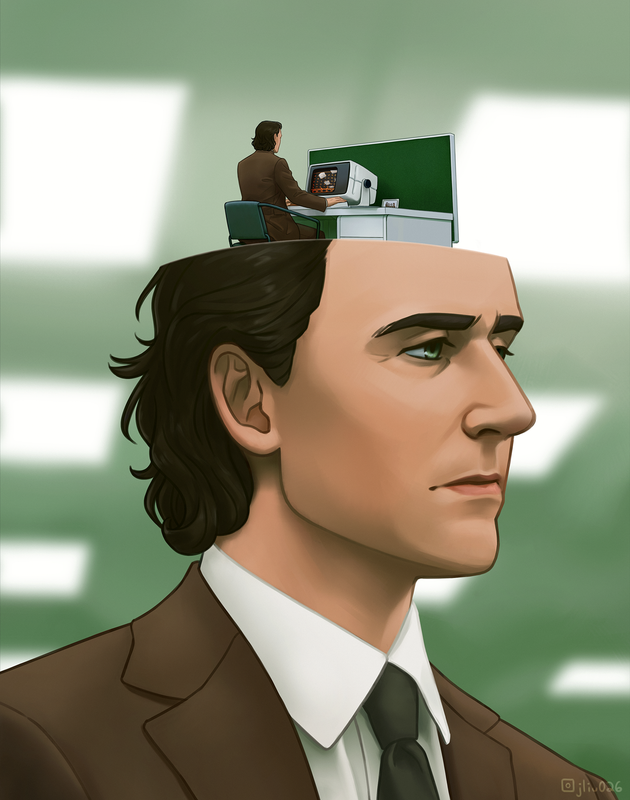
Day One, 9:30 AM
“Who are you?”
The voice infiltrated his consciousness, echoing inside the hollow chamber of his mind. A man’s voice, American, gentle but authoritative.
By rights it should feel jarring, being jolted awake like this. Then again, he wasn’t entirely sure he was awake. It was unnaturally quiet, for one thing; almost like being underwater, if it weren’t for the soft, barely perceptible hiss of static. The words drifted pleasantly in the silence, a collection of vaguely familiar sounds, detached from meaning.
He spared a moment to wonder why everything was dark, before realising that he hadn’t opened his eyes. The prospect of letting in the light made him feel nauseous. He kept his eyelids squeezed shut, focusing on his other senses. The source of the static seemed to be somewhere close to his ear. He shifted experimentally, conscious that he was lying on his back, stretched out on a hard, smooth surface.
“Who – are – you?” the voice repeated, more loudly this time. The increase in volume was unwelcome, and he let out a faint moan of protest. His head was throbbing, a jagged spike of pain driving through the centre of his forehead, which might explain why he was having trouble collecting his thoughts. Maybe if he lay very still and pretended to be asleep, the voice would leave him alone to rest.
“Uhh… hello?”
The crackling sound intensified, like someone was tapping lightly on the head of a microphone to test whether the technology was functioning as expected. He groaned again, more indignantly this time, rolling onto his side with an effort.
“Oh, you’re awake. Sorry about that,” said the voice, returning to its initial gentleness. “Sometimes the speaker doesn’t work so well. I was hoping Technical Services would’ve fixed the problem by now, but I guess they’re just about as busy as the rest of us. I mean, I’ve never actually met anyone from Technical Services, but from what I’ve heard…”
There was a rustling sound, like a hand being placed over a microphone. He waited, counting his own heartbeats, savouring the relative peace while it lasted.
“Can you hear me?” asked the voice, after twenty heartbeats. “Wave at the camera if you can hear me.”
He reluctantly opened his eyelids a crack, allowing a sliver of light to shine through – harsh and artificial, blindingly bright. He blinked, struggling to sit up, but only succeeded in rolling over again, so that he was left sprawling inelegantly on his stomach on what appeared to be a plain wooden conference table. He blinked again, trying to clear his vision.
At the end of the table was a speaker: small and rectangular, dotted with tiny uniform perforations, the plastic casing a bilious shade of off-green. Looking at it for too long made him feel even more nauseous than before.
He raised his head and surveyed the room. The walls were padded (never a good sign), and there was a steel door to his left. A small security camera blinked an eerie red in the corner of the ceiling.
He stared at the camera, willing his head to stop throbbing. The room was spinning. He felt groggy, and his mouth was dry – which was odd, since he didn’t remember drinking last night.
Come to think of it, he didn’t remember last night at all; nor could he be certain (given the absence of windows or any other source of natural light) that “this morning” was, in fact, this morning.
Did he even like drinking? He suddenly realised he couldn’t remember.
“Hi there,” said the voice emanating from the speaker. It sounded warm, almost friendly, although the padded walls seemed to suggest otherwise.
He propped himself up on his elbows, and – after a few failed attempts – finally succeeded in manoeuvring himself into a sitting position, swinging his legs over the side of the table. Long legs, he thought absurdly, before reassessing; my legs.
“I’m afraid I got a little ahead of myself,” said the voice apologetically. “Just bear with me, ok?” There was a shuffling noise that sounded suspiciously like someone hastily flipping through a sheaf of paper. When the voice spoke again, its intonation was formal, almost stilted, like its owner was reading from a script. “I know you’ve just woken up, but I’m gonna have to ask you to complete a brief survey. Just five questions. Does that sound ok to you?”
What?
“Oh, god,” he muttered, leaning over the side of the table to rest his aching head in his hands.
“Sorry to disappoint,” the voice chuckled, as though delighted to go off script. “I’m just the team leader.”
He straightened up, shaking his head in an effort to dispel the mental fog, but the rapid movement only succeeded in giving rise to another wave of dizziness. He pushed his hair out of his eyes with a shaking hand, breathing deeply to steady himself.
“That’s it,” said the voice encouragingly. “Deep breaths, in and out, just like that. You’re doing great.”
“Don’t patronise me.”
“I’m not patronising you, really. I remember what this feels like. I was just as scared as you when I woke up on that table. I said a lot of things I won’t repeat right now, but just between you and me – I threatened to kill the person who woke me up. Can you believe that?”
The camera winked infuriatingly.
“It takes a while to get reoriented,” the voice continued, “but trust me, it’s gonna be ok.”
“Where am I?” he demanded, twisting to glare directly into the camera.
“Let’s not get ahead of ourselves. Again.”
“Let’s not…?” He shook his head incredulously. “Fine. Why am I here?”
His own voice sounded strained, and strangely unfamiliar, like it belonged to someone else. Why did his body not feel like his? Panic surged inside his chest and his throat tightened with anxiety. He raised his hand, intending to loosen his tie (assuming he was wearing one) to alleviate the unpleasant sensation that he was being slowly strangled, only for his fingers to brush against a smooth leather band encircling his neck. His heart rate escalated. Was this some kind of collar? Had he consented to wearing it? Somehow, given the padded walls and the searing pain inside his skull, he didn’t think so. Fingers (his own, he realised distantly) scrabbled frantically at the clasp, desperately trying to tear the collar – or whatever it was – from his neck. It was choking him, he was sure of it; he couldn’t get enough air into his lungs, however hard he struggled to breathe.
“Whoah, it’s ok, just calm down…”
He ignored the voice and levered himself off the table, stumbling as his legs adjusted to being used for their intended purpose. He cleared the floor in three long (though admittedly shaky) strides, reaching the door. It was locked, which was hardly a surprise. He started pummelling the metal surface with his fists, pausing occasionally to aim a savage kick to the hinges.
“I demand that you let me go.”
“Sorry, no can do. It’s against the rules.”
“Then I demand to see whoever makes the rules.”
He banged on the door until his knuckles were bruised and bloodied, determinedly ignoring the way the noise amplified his headache, which was rapidly increasing from unpleasant to unbearable.
“Hey, stop that, you’ll hurt yourself.”
He hurled himself bodily against the door. “Why don’t you come inside and stop me yourself?”
Maybe vague threats and futile displays of aggression wouldn’t convince the voice to let him out, but he certainly didn’t intend to make his captor’s life easy.
“I’d love to,” said the voice, with what sounded like genuine regret. “But I can’t. Not yet, anyway.”
“What do you mean you can’t?” He delivered another well-aimed kick at the door. The jolt of impact made him gasp, tiny white spots bursting in front of his eyes.
“I know this is hard,” soothed the voice. “Why don’t you try taking a deep breath, holding it for ten seconds, then letting it out slowly? Just like before, remember? I promise it’ll help.”
He rested his forehead against the door with a broken moan. The metal felt cool against his skin, soothing his aching head. Everything hurt. He felt like he’d been shattered into fragments, each one sharp enough to cut.
The voice kept talking, murmuring suggestions and encouragement, an endless litany of words that ebbed and flowed like the ocean. For a few moments he stood perfectly still, allowing himself to drift as the words washed over him, filling the empty spaces in his mind. It was almost comforting.
Almost.
Eventually he straightened up and made his way back to the table. Demanding to be let out hadn’t worked, and he didn’t have the strength to forcibly break down the door, which only left one option: it was time to change tactics, pretend to comply until he could work out what the Hel was going on.
He sank into one of the hideous burnt orange office chairs, swivelled it around so that it was facing the camera, and waited.
“That’s better.” The voice sounded relieved. “I’ll let you get comfy, then we’ll make a start. I don’t wanna rush you, but we’re running a little behind schedule here…”
“Make a start?”
“On the survey.”
“Oh.” He paused, casting his mind back. “Five questions?”
“Five questions,” the voice confirmed. “Then we’re done.”
“And what do I get at the end?”
“Well,” said the voice, with an audible shrug, “I guess that depends on your answers.”
Day One, 8:45 AM
Don sat in the driver’s seat of his badly parked car, trying to pull himself together. He was hunched over the steering wheel, wracked by sobs, the full-body kind that left him shaking and gasping for air.
“Wracked by sobs” was a phrase Don had always associated with fiction. It belonged to the grief-stricken parents of murder victims in airport paperbacks, or stoic detectives who’d reached breaking point after being forced to confront the very worst of human nature. He’d never expected to apply it to himself, and he couldn’t help the creeping sense of shame at his lack of control over his own physical responses. It felt disproportionate; an overreaction to circumstances that were – when all was said and done – entirely unexceptional. After all, there were plenty of people his age navigating drawn-out divorces and complicated shared custody arrangements. Don was luckier than most: he had a well-paying job, a home, and two beautiful boys, even if he only saw them a handful of times a year these days, on birthdays and over the holidays. He needed to pull himself together for their sake, if not for his own.
He gripped the steering wheel until his knuckles were white, the leather hard and unyielding under his palms, willing himself to keep his emotions in check. His shoulders and jaw ached with the tension of trying to hold so much inside, but it was better than the alternative: losing control entirely.
His therapist (ok, ex-therapist) had encouraged him to “stop bottling things up” and extolled the benefits of “emotional honesty”. Based on how guilty and wrung-out he always felt afterwards, Don was far from convinced this was helpful advice. He’d smiled politely, thanked the therapist for her time, and left without booking another appointment.
He concentrated on taking deep, measured breaths, slowly relaxing his hands and flexing his aching fingers. The digital clock on the dashboard told him it was already 8.45am – he was running late again.
Had his bosses (whoever they were) noticed that his customary punctuality was starting to slip? No one from the TVA had contacted him with a friendly reminder about designated working hours or to issue a formal reprimand, but all the same, he couldn’t help wondering whether the productivity of his counterpart inside the TVA was suffering.
The rhythmic clack of high heels reverberated on the asphalt outside. Don risked a glance out the window, hoping the owner of the heels didn’t suddenly decide to turn their head and catch his eye. The woman’s greying hair was pulled into a taut bun, neat and businesslike. She strode across the parking lot towards the imposing brutalist structure that served as the entrance to the TVA, exuding energy and efficiency.
Don wondered, idly, whether she was a severed worker. Employee start and leave times were staggered to reduce the likelihood of chance encounters, and the TVA was unwilling to disclose the number of people who’d volunteered to undergo the controversial procedure. He didn’t have any real sense of how many of his fellow workers had responded to the glossy advertisements showcasing the new technology – large-scale posters plastered to the sides of buildings, featuring slogans like “Struggling with work/life balance? Optimise your productivity and maximise your free time!”, or simply “Time. Make the most of it”, accompanied by the TVA’s distinctive orange logo.
The slogans were superimposed over digitally spliced photographs of attractive people with identical gleaming smiles: one half of the photograph featured a severed employee in a regulation brown suit, while the other half featured the employee’s blissfully happy “real world” counterpart, usually in a flowing dress or a Hawaiin shirt, unshackled from the demands of the workplace and free to spend every second of their waking lives exactly as they chose.
That was the theory, anyway. Don hadn’t yet attained the level of carefree independence promised by the “Severance: The Time is Now” section of the TVA’s website, but he was happy for those that had. He was acutely aware that his inability to move on from losing his wife and his previous job in rapid succession was a personal failing; it wasn’t a reflection on the procedure one way or the other. The procedure worked, according to the hundreds of testimonials on the TVA’s website. It was voluntary and painless. Or at least, Don guessed it was painless. He didn’t feel any pain from the microchip the TVA had implanted in his mind that split his consciousness into two – his real world self and the self that worked inside the confines of the TVA, a consciousness Don retained no memory of.
Not everyone agreed, of course. According to the increasingly vocal protest groups that appeared on television and handed out leaflets in the streets, severance was a threat to the very fabric of society, an abomination that made a mockery of personal autonomy. According to them, the TVA was creating a self-enslaved workforce, ushering in a dystopian future of mindless productivity, the first step in a sinister plan to roll out severance to the population at large and seize control.
Don could see their point of view, even if he didn’t necessarily agree with it. After all, the TVA hadn’t done itself any favours with the name “severance”, which most people found distinctly alarming. He preferred to think of it as a kind of radical compartmentalisation. His sister back in Cleveland worried about the possible negative effects on his mental health (“no one understands how the procedure works, not really – they’re messing around inside your head, you don’t think that’s gonna have unintended consequences?”), conveniently forgetting that prior to being severed, Don had barely been able to drag himself out of the house. Now he was getting up with his alarm (albeit with an effort) and driving himself to work each morning (even if he ran late more often than he’d like), which, personally, he counted as an improvement.
If he thought there was any truth to the rumours that the TVA was preparing to forcibly subject the rest of the world to the procedure or experimenting with sinister mind-wiping technology, he’d be the first to man the picket lines. But the conspiracy theories were comically outlandish – the plot to roll out severance on an industrial scale sounded highly impractical, aside from anything else; and it was hard to take the more militant protesters seriously when they insisted on framing ordinary, unassuming office workers as harbingers of the apocalypse.
Don watched as the woman with the high heels ascended the concrete steps leading to the TVA’s glass-fronted entrance, swiped her security card, and stepped inside. He had to admit it was an odd feeling, not having the slightest idea who the woman was or whether he knew her on the inside. Maybe they were colleagues? Friends, even. Or maybe they enjoyed a healthy office rivalry.
It would have bothered him, once – the alienation, the enforced anonymity. Gemma used to call him a “people person”. He’d been enough of a “people person” to pursue a career in sales, a job he’d enjoyed and found fulfilling.
That felt like a very long time ago.
Don gave his reflection a cursory glance in the mirror. His eyes were noticeably red-rimmed, but there was no helping that. He’d already delayed long enough. Besides, in the blink of an eye he’d be back in the parking lot, demisting the windscreen and thinking about what to make for dinner.
He carefully straightened his brown TVA-issue tie and opened the door, fortifying himself to face a day he wouldn’t remember.
Day One, 9:47 AM
“Ok, buckle up – here we go.”
The speaker crackled with the sound of rustling paper.
“First question.” The voice waited for a beat. “Who are you?”
“Really?” He scoffed. “That’s the first question?”
“You sound surprised.”
“I was expecting something more challenging.”
Who are you? His thoughts swirled around the question. It should be easy to answer, but every time he tried it was like passing his hand through a wisp of cloud that drifted and dispersed, leaving nothing in its wake.
“Well?” the voice prompted after a prolonged silence. “It’s ok if you can’t answer, we can skip ahead to question number two…”
“Of course I can answer.” His own voice wavered slightly, sounding considerably less confident than it had inside his head.
The speaker “hmmm’d” politely, clearly unconvinced.
“Let me put it another way. What’s your name?”
“My… my name?” He searched the darkened void of his mind, scrambling desperately to find something – anything – that might help. He remembered names, of course he did; as an abstract concept, anyway. The names of trees and flowers, cities and streets. But his name?
He fidgeted restlessly, conscious that the voice was waiting. In the absence of certainty, the only option available to him was to take a wild guess. He inhaled a shaky breath, hoping the answer would come to him once he opened his mouth to speak.
“It’s…”
There was nothing. The soft hiss of static filled the silence.
“Feel free to say ‘unknown’ if you don’t know.”
“This is absurd. Obviously I know my own name. It’s…”
“We can circle back to question one later,” promised the voice. “I’m gonna go ahead and put down ‘unknown’ for now, ok?”
He remained stubbornly silent. A faint sigh drifted over the speaker.
“Ok.” A rustling sound. “Next question. Where were you born?”
“I…” He trailed off, swaying slightly, disoriented by the vertiginous sense of reaching for something, only to fall forwards as he found himself grasping at thin air. The briefest glimpse of white flashed through his mind – clouds perhaps, or snow – and then… nothing. “I don’t…”
“Unknown,” the voice stated, seemingly unconcerned by his inability to answer the most basic questions. “Question number three…”
The collar around his throat seemed to tighten again. “What have you done to me?”
“…name a capital city.”
“Answer the question,” he demanded fiercely.
“You’re the one who’s supposed to be answering questions,” the voice returned calmly.
“You’ve drugged me. What with? Is this some kind of experiment?”
“Any capital city,” the voice repeated, “anywhere on Earth.”
“Anywhere on Earth?” He frowned, struggling to think. “Helsinki.”
“Helsinki.” A faint scratching noise, as though the owner of the voice had paused to note this down. “That’s a good answer. You’re doing great.”
He folded his arms, craning his neck to glare at the security camera. “I said don’t patronise me.”
“I’m not patronising you – these questions aren’t designed to be easy.”
“These questions are infantalising and absurd.”
“Noted. I’m sorry you feel that way. We’ll take your feedback on board – the Founder always welcomes constructive criticism.”
“And who, pray tell, is the Founder?”
“Question four,” the voice continued. “What is the first of the Nine Principles?”
“I… the nine what? ”
“For the record, I’ve marked that down as ‘unknown’”.
His pulse was racing. Panic clawed at his insides, demanding an outlet. He raised a shaking hand to his collar, fighting the futile urge to try to tear it from around his neck.
“Just one more question,” the voice murmured, “then we’re done. Do you think you can do that for me?”
“I…” He gulped a shuddering breath. “I don’t…” He wanted this to stop. He wanted to wake up to find this had all been a nightmare. It was only with a supreme effort of will that he stopped himself from uttering the single word hovering on the tip of his tongue: please.
“To the best of your memory, what is – or was – the colour of your mother’s eyes?”
Silence fell. The spike of adrenaline ebbed, leaving only a creeping sense of dread and profound emptiness. He felt utterly defeated.
“I don’t remember,” he whispered.
“Ok,” said the voice, with disarming gentleness. “And that’s a wrap.”
“You mean… that’s it?”
“That’s it,” the voice confirmed. “Unknown, unknown, Helsinki, unknown, unknown.”
He closed his eyes, listening to the blood rushing in his ears and the sound of his own too-rapid heartbeat. He wondered whether he'd passed the test. Given his failure to answer four out of five questions, it seemed unlikely. Then again, nothing about this situation made sense.
“Where am I?” he muttered, more to himself than to the voice. “What the Hel is this place?”
A sound from the other side of the room caused him to whip round. The door opened a crack. He jumped to his feet, but his reflexes were sluggish; before he could make a dash for freedom, a man stepped through, closing the door behind him with a resounding click. Silver hair, a neat moustache, a truly hideous brown suit – a parody of a corporate drone, if it weren’t for his eyes, bright blue and sparkling with intelligence.
The man didn’t make any attempt to move closer. He stood with his hands raised in what was apparently intended to be a placating gesture, smiling encouragingly.
“Congratulations,” said the owner of the voice. “That’s a perfect score.”