
Work Text:
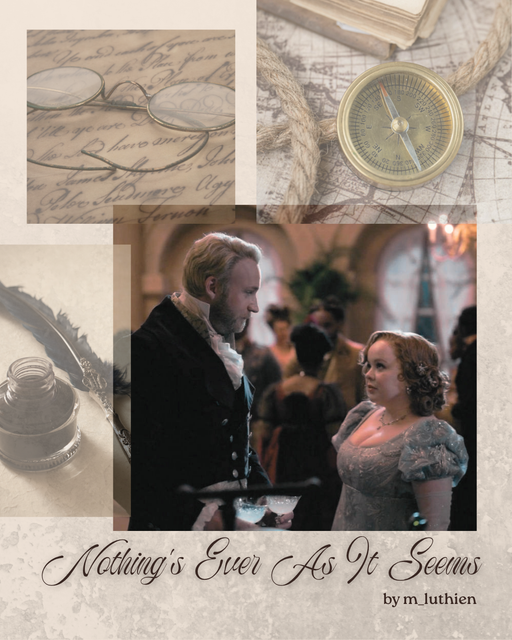
Lord Alfred Debling was used to being the odd one out, and it was no different when he found himself traveling with a small group in Italy.
Their interests could not have been more disparate. While the young gentlemen were eager to visit galleries, admire the architecture, and attend the parties and balls one typically sought out on a Grand Tour, Alfred was there to observe and document birds.
He was especially interested in species that migrated through the Mediterranean, and apparently waking before dawn to observe wildlife was considered eccentric. But he was simply a wealthy gentleman with a profound curiosity, one with the education and means to pursue it.
While others traveled to see the world, Alfred traveled to understand it.
Every now and then on his naturalist tour, Alfred would join other traveling gentlemen for safety and convenience. As much as he preferred traveling alone, he found it amusing to observe the behavior and traits of the future of England’s Parliament.
Lord Wilding, for example, had a restless quality that reminded him of a goldfinch—forever darting toward the next distraction, especially if she fluttered her eyelashes and moved her skirt. As painfully obvious as it was, Lord Stanton was unmistakably a peacock. Very interested in displaying himself, but not very interesting beyond that. Lord Cho possessed the easy adaptability of a swallow, which Alfred almost admired, except that most of the time it simply meant he was content to follow wherever the group happened to wander, without seeming to have any opinions of his own.
The fourth gentleman was harder to classify.
Mr. Colin Bridgerton was not a lord, not an heir, and not even a spare. Alfred could not begin to comprehend why his parents chose to have more children when they already had two adequate sons. He did notice that Mr. Bridgerton was an observer such as himself, though he seemed to be driven by beauty and glimmers rather than scientific discovery.
Perhaps Mr. Bridgerton was like a kingfisher. Curious, but not particularly purposeful.
Which was why it should not have come as a surprise when Mr. Bridgerton came to him for help.
Alfred was sitting at a small table near the window of the inn’s breakfast room, going over his notes from the previous day’s excursion, when Mr. Bridgerton dropped into the chair opposite him with an unusual request.
“I need your help to write a letter.”
Alfred narrowed his eyes. “I beg your pardon?”
“You are writing all the time in your notebook. You must be proficient.”
“I understand you are young and this is your first tour, but you must know that personal correspondence and research are wildly different.” Alfred raised a brow.
Mr. Bridgerton chuckled. “You are a peculiar man, Lord Debling.”
"I am afraid I do not follow," Alfred sighed.
“I find comfort in your company on this journey. It is almost like… having a big brother.”
Alfred did not know how he felt about the comment. He was not a family-oriented man and preferred to ignore his family’s existence, as they did his, but he had a feeling that Mr. Bridgerton had meant it as a compliment somehow. It made him uncomfortable, but it also made him take pity on the man.
“Very well. Who are you writing to?” Alfred asked, resigned.
“My mother, my older brothers, my sister the Duchess, my younger sisters too. Perhaps all my sisters…”
“Bridgerton.” Alfred stopped him. “I will help you with one letter.”
Alfred watched as he considered this, completely unaware that he had just caused the man to have an existential crisis.
“Penelope,” Mr. Bridgerton finally said. “Help me write to Penelope.”
He considered the name, and thought it rolled off the tongue quite nicely. “Perfect. Which sister is Penelope?”
Mr. Bridgerton blinked. “Sister? She is not a sister.”
“A cousin, then?”
“She is a friend. An old friend.” Mr. Bridgerton added, “She lives across the street.”
Alfred nodded, tapping his fingers against the table. “Then I am afraid I cannot help you.”
“You just said you would help me with one letter.”
“I do not think it is appropriate.”
“Why would it not be?”
Alfred pinched the bridge of his nose with a sigh. “Do you have feelings for Miss Penelope?”
“What does that—”
“I draw the line at love letters,” Alfred said firmly. “Especially to unmarried, gentlebred women.”
“But Penelope does not count,” Mr. Bridgerton was quick to correct him. “My mother has informed me that Penelope’s father has passed. I want to write something, but I do not know what.”
Alfred felt a pit form in his stomach. He had no idea who this young woman was, and he already felt terrible for her. The worst part was that Mr. Bridgerton did not seem to grasp how horrible that sounded. Alfred did not have many friends, least of all a friend of the opposite sex, but even he knew that was no way to speak of someone. He was now afraid of what Mr. Bridgerton might write to a grieving woman if he refused to help him. The obliviousness seemed to have no limit.
“In that case…” Alfred paused. “I might have an idea.”
—
After their time in Florence, the group moved on to Rome. The gentlemen were looking forward to seeing the ruins and Roman baths, while Alfred was anxious to observe whether the migratory birds were behaving as he had expected. He was inspecting the trees surrounding the inn for nests and any signs of the birds when Mr. Bridgerton once again interrupted his solitude.
“Penelope wrote back,” he said, skipping pleasantries. “I was not expecting her to reply.”
Alfred turned to him, his hands clasped behind his back. It had been weeks since he had written the letter of condolence, and he had almost forgotten why it was relevant to him in the first place.
“Good,” Alfred simply offered.
“Do I write back? Does she expect me to?” Mr. Bridgerton began fidgeting with the letter in his hands.
“That would be polite, yes.”
“You should read it, then.”
“Me?”
“Well, you are writing her back, are you not?”
Alfred looked away for a moment before looking at him again. “I said one letter. You have already redeemed it.”
“Debling... She seemed to have liked your bird metaphor. I cannot do bird metaphors,” he pleaded.
Alfred was not in the slightest moved by the pathetic look in his eyes, but it did pique his interest that Miss Penelope had liked what he wrote. Enough, perhaps, to make him take the letter from Mr. Bridgerton's hand and read it at once.
Dear Mr. Bridgerton,
I appreciate your kind words, and I thought you should know that they have brought me comfort in these uncertain times. Grief comes, indeed, like a wild bird—unpredictable and ever-present, as you have suggested. It also led me to believe that, just as there are countless species, there are many kinds of grief, as I am discovering every day.
Each one a unique bird, each one persistent in its own way.
I do not wish to bore you with my ramblings. I simply wanted to thank you for writing. I hope your travels are everything you had hoped for. You must tell me, someday, how green the grass is, how blue the waters and the sky, and about the different birds you watch come and go.
Your friend,
Penelope Featherington
—
Alfred’s lips curved upwards as he read it again. He had written and read far too many letters, but he could not think of one that had ever been quite so personal. And, to the best of his knowledge, something he had said or written had never inspired or comforted someone quite this way. Miss Featherington had taken his observation and expanded upon it into something he had not considered.
He knew that his cataloguing of species would benefit the scientific community, and he had high hopes that his findings would directly contribute to the growing body of work begun by Linnaeus several decades before. He had never expected his language to help describe something deeply sentimental and... human.
“Thank you so much for doing this,” Mr. Bridgerton said with a smile.
“I have not agreed to it,” Alfred replied, raising a brow.
“You are smiling, and you never smile,” Colin observed. “Not around me, anyway. But considering I am the one who annoys you the least, I would wager it does not happen often. With people, I mean. You seem to enjoy your work tremendously.”
It was becoming difficult to hide his amusement whenever Bridgerton went on and on about something. It also made him decide that Miss Featherington deserved letters better than the terrible ones Colin must have been writing, considering only his mother and older brother ever replied to him. So far, he had achieved a response in twenty-eight instances out of a hundred, while Alfred was one for one. That objectively made his correspondence superior and more effective.
“Fine. I shall write to her one more time.”
—
It was not merely one more time.
What started as a simple note of condolence became a volume of letters that could potentially be published as a short novel. The more he read her words and thoughts, the more devoted he became to writing back. Miss Featherington saw the world in such a different way from him that he started to crave her perspective.
He told her about traversing the rugged cliffs of Mount Parnassus and being astounded to learn about the Golden Eagle and its highly developed air sacs. He explained how these anatomical structures granted the creature an unrivalled capacity for sustained high-altitude flight and allowed it to soar through the thin mountain air where lesser beasts would surely suffocate.
Even he thought after writing it that his words were perhaps too clinical, but she did not dismiss them. Instead, she offered that the majestic Golden Eagle was the very symbol of Zeus, and that the eagle flew so high not because of its lungs, but because it longed to return to the right hand of thunder.
He would talk about how nature worked, and she would explain what people believed. Something he had never truly cared for—until he learned that she did.
None of his words passed her by. She gave attention to each and replied to them in an unexpected way every time. He could tell she was a great listener simply by that fact. And a conversationalist as well. She made him want to share more than just his work, which he did not believe he had much to say about in the first place, especially when he was pretending to be someone else and still had to conceal the parts of himself that would make it obvious he was not her Mr. Bridgerton.
As one letter kept turning into another, Alfred adjusted his travel itinerary to follow Bridgerton. The weeks turned into months, and before he knew it, he had spent the entire summer writing to Miss Featherington.
Alfred was waiting outside the inn for his transport when Mr. Bridgerton approached him.
“The time has come, my friend. I am returning to London first thing in the morning.”
Alfred turned to him, raising a brow. “I thought it was not for another month.”
“I was able to make it sooner. I am eager to see my family again. You must understand the feeling.”
“I cannot say that I do.” Alfred cleared his throat. “That is wonderful news. Now I can return to my original travel plans without having to chaperone you.”
“I will miss your humor, Debling. Thank you for all your help.” Mr. Bridgerton chuckled, placing a hand on Alfred’s shoulder.
Alfred looked down at where his hand rested, then back up at him.
“Writing about my research in a personal manner has proven to be a helpful exercise,” he answered politely, trying not to show any emotion.
“I am glad. Well, I shall leave you to it. I need to start packing.” Mr. Bridgerton gave a small bow and turned to leave..
“Bridgerton,” Alfred called. “The letters.”
“What about the letters?”
“You must tell Miss Featherington.”
Mr. Bridgerton shook his head. “But…”
“If you are indeed her friend, you must be truthful. And if she cares about you, she will understand,” Alfred remarked.
“Very well, then.” Mr. Bridgerton sighed. “I will tell her.”
Alfred watched him leave, and although it was all he wanted all along, the thought of Mr. Bridgerton returning to London left him feeling strangely hollow.
—
The following months were filled with more field research, more notes, more observations.
But no one to share them with except his own journals and the occasional guide he had with him, whom Alfred was positive only listened to him because they were being paid a healthy amount of coin. Even if that was not the case, no one could offer him what Miss Featherington had. When it came to others, he possessed a terrible indifference, caring no more for their thoughts or their plights than his top hat cared for treacle tart.
Slowly, he began to notice that he was sharper with his words and that his patience was dissolving quickly. It seemed that the lack of letters was not only affecting his intellectual life but his mood as well, similar to the behaviours observed in isolated avians. Her silence had reduced him to nothing more than a lonely, captive bird, driven frantic by the desertion of its mate.
Mate.
The thought was preposterous. It felt impossible to feel so deeply for someone he had never met in person. But perhaps, like grief, love came in many forms.
Love.
It made him want to laugh. It also made him want to pick up his quill and write to her.
Surely, by this time, Bridgerton would have told her the truth and he could continue writing to her from where they left off.
—
Miss Featherington,
I hope London agrees with you.
I recently spotted a pair of hoopoes and immediately thought you would appreciate their rather ridiculous appearance.
Their name is nearly as absurd as the birds themselves, though I confess I have always been fond of creatures named after their call. It makes recording their sightings considerably easier and, according to local superstition, if one hears a hoopoe before uncorking a bottle, the wine within will be excellent.
I am far from being a superstitious man, but the notion amused me nonetheless, and thought it would bring a smile to your face to share something less factual for a change.
Their striking colouring and distinct black-and-white wings, combined with their pompous crest, make them somehow comical and beautiful at the same time. They seem precisely the sort of creatures you would have found interesting.
With every good wish,
Lord Debling
—
Lord Debling,
I apologize but I do not understand how we know each other and why you would assume colorful birds and local superstitions would amuse me. It seems rather presumptuous. I only write back to kindly ask you to not write to me anymore.
I wish you safe travels,
Miss Penelope Featherington
—
There was no word in the Oxford Dictionary to quite describe how devastated Alfred felt as he read the letter in his hands. After months without her words, her cold reply only hardened his already frosted heart.
It was not her fault, either. There was only one person responsible for this colossal misunderstanding. Yet confronting Mr. Bridgerton about failing to keep his word would only expose that Alfred had contacted Miss Featherington and that she had replied, which would not reflect well on her. They were not old friends or neighbours, or any of the other excuses Bridgerton had told himself to make writing to her acceptable.
He decided there was no other way but to respect her wishes.
Alfred spent the following months throwing himself into his work. While in the Mediterranean once again, he encountered a species whose migration raised questions about the far northern routes. He was fascinated by the way birds navigated enormous distances and began reading more about their Arctic breeding grounds.
The birds he had been studying did not care for the boundaries men had drawn upon maps. They crossed oceans, mountains, and frozen waters without hesitation, returning each year to places Alfred could barely imagine. He needed to know precisely where they went.
All his travels so far had been about following paths that already existed, with the intent of obtaining a new observation. Perhaps what he needed was something entirely new—somewhere no one could reach him, since no one seemed to desire it at all.
It was time to follow a route that had not yet been conquered.
But first, he needed to go home to attend to his estate affairs.
Such as finding a wife.
—
Upon his return to London, it did not take long for Alfred to feel like the odd one out yet again. It took precisely one declined invitation to a hunting event for him to become the most eccentric man in the Ton, as though killing animals for sport and eating meat were the only interests a man could have.
He thought of reaching out to Miss Featherington more than once, but he did not want to frighten her. He still did not know what she looked like, though he remembered her address very well. But if writing a letter was not welcome, he concluded that a surprise visit would only drive her further away.
Perhaps it was for the best that he did not know who she was at all. The journey he was about to embark on was a solitary one, and he had to concentrate his efforts on identifying a sensible wife for the role of producing an heir and administering his estate while he was gone. There was room for little else in his heart besides his passion for his work.
He thought about approaching Mr. Bridgerton more than once, too.
Mr. Bridgerton had changed considerably since their journey. He was a kingfisher no more, and had become something of a bowerbird. He had apparently collected Stanton’s methods of attracting women, though he visibly lacked the confidence or, more importantly, the commitment to the performance.
That much was clear to him as Alfred observed Mr. Bridgerton, Lord Stanton, and Lord Cho interacting from across the ballroom. It was a rather kind way of putting it, he told himself.
If Alfred were less of a gentleman, he would easily reclassify Mr. Bridgerton as a cuckoo.
It appeared the opening ball of the Season was an eye-opener indeed.
Suddenly, everyone’s attention turned to a red-haired woman wearing a striking dark green gown as she descended the grand staircase. The air shifted the moment she walked in, and it was impossible to ignore her.
His eyes followed her as she crossed the room. He wanted to speak with her, but he needed to wait for the right opportunity, such as letting others fail before him to make himself look better.
When he noticed her distress by the dessert table, he saw his opportunity to approach.
“Are you well, Miss…?”
“Yes, forgive me. Cold headache,” she replied quickly.
“From the ice cream or the very congenial-looking miss with the sneer?”
She looked to the side, where Miss Livingston stood glaring at them.
“Do not worry. I have been the recipient of an untold number of withering looks. Hers was mediocre at best.”
“And why do I have a feeling that you, in turn, know how to make one wither if you so choose?”
He was not a charmer. He was practical. Though he had his moments, he had no idea where that had come from. He was quite satisfied when the young lady in front of him turned the prettiest shade of pink, but it was short-lived when he realized he might have embarrassed her.
“I do not… I suppose…” She stammered.
“I apologize for being forward.” He cleared his throat.
“No, please. It is better to know a gentleman’s intentions than to be strung along.” She said it with the pain of someone who had experienced it. “Or pretend to be someone you are not.”
She glanced briefly behind his shoulder, and he followed her gaze to none other than Mr. Bridgerton.
He turned back to her and took a deep breath.
It could not be.
The most interesting, kind, and witty person he had ever met could not possibly be the most beautiful, too. There had to be some law of nature preventing one woman from possessing the ability to bring any man to his knees with a look. In that moment, he understood why poets were forever making fools of themselves.
But he did not have any poetry in him. What he had were months of bird analogies. It seemed only fitting that, now that he finally stood before her, he should describe her as one.
“You have the rare magnificence of a bird of prey,” he said softly. “Keen eyes that see right to the heart of the matter.”
She blinked, looking confused for a second. When she looked up at him, he smiled.
“It is a pleasure to finally meet you, Miss Featherington.”
“Lord Debling,” she whispered. “It was really you.”
He raised a brow, and she continued.
“The letters. All of them.”
He nodded once. “I see he finally told you.”
She looked down at her hands, twisting her gloved fingers together.
“I knew,” she said quietly. “Or… I suspected.”
Alfred's brow furrowed.
“Your letter.” She swallowed. “The one you signed yourself. It sounded like you.”
He remained silent.
“I had read so many of your letters by then that I could hear your voice in it.” A small, embarrassed smile touched her lips. “And then I realized I had been writing to you all along.”
Alfred stared at her, his chest tightening. Although he had always maintained that she needed to know the truth, he had never considered what she must have felt upon learning about the deception.
“I confronted Mr. Bridgerton,” she continued. “He admitted it.”
“Then why did you not write?” He asked without thinking.
“Because I did not know what to say.” Her cheeks flushed. “And I did not know where you were.”
Alfred felt the knot in his chest loosen and tighten again. All the time he was trying to stay as further away as possible, she was wondering where he was.
“Why did you do it?” She finally looked up at him.
“It started as a favour to a… travelling companion.” Alfred inhaled deeply. “And I continued because I made a friend. In you.”
“A friend?” She let out a dry laugh. “You lied to me, too. For months…”
“I did not think you would keep writing if you knew it was not your old friend. And you proved my point later on,” he said, his voice tinged with sadness.
“Because I did not know what to make of it!” she defended, finally looking up at him again.
Alfred stared into her crystal blue eyes, which rivalled every ocean and sea he had travelled upon. He wanted to calm the waves he saw battling within them.
“I understood that. It is why I did as you requested and stopped writing. I thought you had asked me to leave you in peace.”
“I thought you had abandoned me.” She was quiet for a moment before whispering, “Or that he had. If I had known it were you all along, I would not have asked you to stop.”
He tilted his head, narrowing his eyes. “But Mr. Bridgerton…”
“Mr. Bridgerton is simply what you said—an old friend. He is not the man from the letters. He is not the man…” She could not finish.
“He is not the man for you,” Alfred completed. “It appears that I am.”
She gasped softly, looking into his eyes.
“I apologize again for my forwardness.” He cleared his throat.
“I do not mind.” She smiled at him and echoed her previous words. “It is nice to know a gentleman’s intentions.”
Alfred smiled back. He offered her his hand and escorted her to the dance floor.
The following day, he requested Lady Featherington’s permission to court Miss Featherington. After she was nearly hit by the Hawkins balloon at the fair a couple of weeks later, he proposed right there on the grass when she fell on top of him. He did not want to risk either of them losing their lives before they were married.
They celebrated their engagement at the Innovations Ball that evening, much to everyone’s delight. Except he was quite confused as to why Mr. Bridgerton looked so sour at the edge of the ballroom. After all, Alfred had done him the considerable favour of writing all those letters.
After a lifetime of travelling in search of something new, Alfred decided there was only one journey left worth taking: the one home with his wife.