
Chapter Text
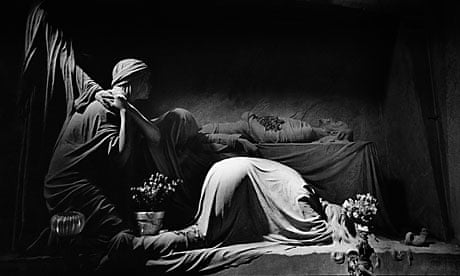
For the last ten minutes of the interview, Peter could feel a physical itch to escape the room in any way that he can. It’s not that he is against giving interviews, unlike that of his former bandmate, Peter just thought he would do something for the anniversary. Now he sat with his eyes trained on the red light on the recorder and tried to count the seconds in his head.
There was always a little red light somewhere, on a camera or a sound desk or the telephone propped between him and whichever poor sod had been sent to ask the same questions for the hundredth time, questions that are hardly germane to what the interview initially promised. The dim light glowed from the table now with patient, mechanical attention while the studio lamps warmed the side of his face and the interviewer nodded across from him. Peter had spent half his life noticing those lights and knowing perfectly well that he ought to be careful; he had spent the other half deciding that he did not give a fuck.
The interviewer thanked him with the solemn enthusiasm of someone who had just been entrusted with history. He was a young lad, donning a Joy Division shirt so clean yet creased at the same time, Peter suspected it had arrived in the post that morning.
“Brilliant,” the lad said, taking off his headphones. “That was really brilliant. Thank you.”
“Was it?”
“Oh, absolutely.”
Peter doubted that, though it had begun well enough. Forty-six years since the release of Closer, what did the record mean to him now, what did he remember about hearing the final mix, and had their relationship with Martin Hannett changed during the sessions? The lad had even asked whether Ian understood what sort of record they were making, which was the kind of question that could keep Peter interested enough before eventually the program forced the poor lad to return to what they really wanted.
Then, by increments so familiar that he should have felt them coming, the conversation had wandered from Joy Division into New Order, from New Order into the split, and from the split into Bernard. It always did. You could begin with a bass string, a snare drum or the weather in Stockport in 1979, and sooner or later somebody would find a route to Barney. Even now he seemed to occupy the room uninvitedly, more than Ian did, when it was an anniversary for a Joy Division project.
Peter had said what he generally said, although lately he had begun to wonder whether repeating a thing made it more truthful or merely easier to recite. He spoke about the money, the name and the years of not speaking. He used the word betrayal because it was accurate, then used it again out of spite. Finally, he made a joke about the present line-up, and the interviewer laughed with the visible relief of a man who Peter can recognize just latched onto something that can be a headline.
Peter could already see it on a screen by teatime, PETER HOOK SAYS HE AND BERNARD WILL NEVER STOOD IN THE SAME ROOM TOGETHER. If they were feeling especially delicate, they might choose HOOKY SLAMS NEW ORDER ON CLOSER ANNIVERSARY, which would give the whole ordeal the “tasteful” air it deserved.
Ian would have enjoyed the absurdity, at least. Peter could picture the look that used to come over him in the middle of an argument, his chin tucked towards his chest and his eyes raised as he fought not to laugh. The effort would tighten his mouth first, then set his shoulders shaking, usually at the precise moment Peter was most determined to remain angry. Once Ian began, Steve would follow, and before long Peter would be shouting at three grinning idiots without being able to remember what the row had been about.
“You all right there?” A voice cut through his reminiscences.
Peter looked up and found the room already scattered, he remained sitting awkwardly. A woman was winding a length of cable around her elbow while the cameraman and the interviewer bent over a small monitor.
“All good,” he said, and pushed himself out of the chair.
His right knee gave its customary complaint. Peter winced, seventy years old, for Christ’s sake, it still sounded like somebody else’s age in his head, especially now. He could accept fifty, which had possessed a sort of battered dignity, and he had eventually made peace with sixty. Seventy, however, was taking the piss.
He retrieved his jacket from the back of the chair, but before he could leave, the young interviewer abandoned the monitor and hurried after him.
“Sorry, pardon me, there was one more thing I meant to ask.”
Peter waited with one arm in his jacket. The lad glanced towards the recorder even though it was no longer running, then seemed to wish that it were so he would have something else to look at.
“Do you think Ian would’ve been upset by what happened between the rest of you?”
That’s a new one, what was he meant to say? Go get an ouija board and find out for yourself?
“What, you mean would he have knocked our heads together?”
“Something like that, I suppose.”
Peter pulled on the rest of his jacket and took his time settling it over his shoulders.
“Ian had enough to deal with while he was alive,” he said. “I’m not dragging him into our bloody divorce forty-six years later.”
The answer came out harder than the question deserved. The interviewer nodded quickly and began to apologise, which only made Peter feel like more of an arse.
“Anyway,” he added, because common sense had never once succeeded in stopping him after he had started, “he’d probably have formed a band with Steve and left me and Barney to kill each other.”
That earned the expected laugh and restored the lad’s colour. Peter gave him a clap on the shoulder, thanked the crew and left before anyone could switch on another red light.
Outside, Manchester was donning her usual grey coat, mercurial as a young lady. The pavement shone without Peter remembering the shower that had wet it, and the long July evening lingered above the buildings in a pale, reluctant wash of light. Wind moved along the street carrying the smell of traffic, damp stone and something fried from a shop around the corner.
Peter tried to wrap his head again around the fact that it had been forty-six years since Closer as his feet carried, and yet people spoke about anniversaries as if time moved in circles, like the earth dragged itself around the sun and returned you to the place where you had begun. Peter had lived long enough to know better. You never returned to the same place, because the years altered the ground beneath you, and even when a date came back, the person meeting it will always be someone new.
Peter recalled with amusement, there were reviews, questions about the sleeve and accusations that Factory had chosen the photograph after Ian’s death, though Peter Saville had completed the design before any of them knew what it would come to resemble.
For the three who remained, there had also been work to do, and Peter had never decided whether that work had saved them or allowed them to avoid being saved. They carried on because stopping would have required them to look directly at what had happened, so they took a new path instead.
Nobody had warned him that grief could wait. It had settled somewhere inside him with all the patience in the world while clubs opened and closed, through when his own friendships hardened first into business arrangements and then into legal disputes. It had waited until he was old enough to understand what twenty-three meant.
Ian had been twenty-three, and the fact grew more obscene with every year Peter survived him. At twenty-four, he had thought twenty-three was a man’s age, old enough to marry, have a child, lead a band and make whatever choices followed. By forty, he had understood that it was young. At seventy, when he looked at photographs of Ian, he sometimes saw a boy wearing a man’s suit and trying to keep a room full of other boys from noticing how frightened he was.
The car was waiting around the corner. Peter exchanged greetings with the driver and climbed into the back with a grunt, bracing automatically for the pull in his knee.
They had barely pulled away before Peter’s phone began to vibrate in his pocket. There were already links to articles and photographs of the Closer sleeve posted by people who had not been born when the record came out. His son had asked how the interview went, and Peter typed “same old bollocks” before sending it.
He watched Manchester pass beyond the rain-flecked window, remade so often that the city of his youth remained only in fragments. A roofline survived here, the angle of a street there, or a pub stood in the old place with a new name painted above the door. Whenever he recognised something, the recognition hurt more than finding it gone, because for an instant he saw both cities occupying the same ground and understood that only one of them still existed.
The interviewer’s question returned to him despite his efforts to leave it behind.
Would Ian have been upset by what happened between the rest of them?
“‘Course he would,” Peter muttered.
The driver glanced at him in the mirror. “Sorry?”
“Nowt, mate.”
Ian had hated quarrels whenever he was not the one causing them. He demanded loyalty with the unreasonable purity of the very young, and although he could be secretive himself, he disliked discovering that anyone had kept something from him.
Peter’s answer at the studio had been true as well. Ian had carried enough of them while he was alive. They had expected him to be the poet, the frontman and the mysterious one because every group needed somebody for the audience to stare at, and Ian had been the one who could make a grotty room feel altered simply by stepping to the microphone. They expected him to climb beneath the lights, swallow whichever tablets the doctors had prescribed that month and give everything he had to people who could not always distinguish illness from performance.
They had loved him; Peter no longer doubted that. The trouble was that love mixed with ignorance could do nearly as much damage as indifference. By the time he reached home, the rain had finally committed itself. It drummed steadily against the kitchen windows while he stood beneath the light and considered opening a bottle. For several seconds he even rested his hand on the cupboard door, thinking of the interview, the photographs and the date, then he took his hand away.
The sitting room held an indecent quantity of records. It was a lifetime duplicated in cardboard and vinyl, with certain parts pressed and sold more often than others. His hand combed through the shelves and found Closer without consciously looking for it.
The sleeve felt cool beneath his fingers. There was the white border, the Roman lettering and photograph of the Appiani family tomb, its stone figures bowed in grief over the dead. The image had been chosen before Ian died, a coincidence so cruel and complete that people preferred to believe it had been deliberate. Peter had once found the entire thing unbearably pretentious.
“It was all wrong,”
The rain continued against the glass.
“You did it for all the wrong reasons.” He can’t help but let it slip out.
Peter had said versions of that in interviews, and people often mistook the anger in it for anger at Ian. Perhaps some of it was, because anger was less humiliating than helplessness and far easier to perform in public. He could list the forces that had closed around Ian as neatly as tracks on a record. Yet it was also true that none of them understood what was happening, they didn’t dare step back further enough to see what trap was forming, and that they as well were one of the contributing factors.
He ran his thumb along the edge of the sleeve.
Peter did not put the record on, he knew every note, including the spaces Hannett had forced between them, and listening to it alone on the anniversary would have felt too much like participating in his own documentary. He laid it carefully on the table and leaned back, allowing the sound of the rain to occupy the room instead.
In the midst of his reminiscence, his mind disloyally brings up Bernard again, just like those hungry interviewers. Peter sighed, they had known each other before either of them knew Ian. That was the ugliest part, and it was the detail strangers generally failed to understand. Hatred was not the opposite of love, at least not when it endured for this long, resentment such as theirs required intimacy, because you could not feel betrayed by someone you had never trusted. You could not spend nearly twenty years resenting a man’s absence unless you remembered how his presence had felt.
Peter closed his eyes and let his head settle against the chair. He was tired in a way that had little to do with interviews or travel, and was older and heavier than anything sleep ordinarily cured. For years, Peter had told the story as if they had all been blind, but that was not quite true. They had seen Ian’s hands shake and watched him withdraw into a silence none of them knew how to enter.
If he could go back, Peter sometimes told interviewers, they would handle it differently. Alas, it was still just idealistics, of course after nearly half a century, it was easy to sound wise and to lend the young men they had been knowledge that nobody around them seemed to possess.
In private, however, his imagined rescue was never so informed or well organised. In private, Peter simply went to Ian’s house. He could knock until Ian opened the door, then he doesn’t know how but he’d not let the guy out of their sight. Peter never knew what he would say after that. Every speech he tried sounded false.
His chin sank slowly towards his chest while the rain went on falling, the fantasy dragged his heavy lids down, and unconsciousness slowly took a hold of Peter. That peacefulness, however, would not greet him when he woke up.
There was no gentle ascent from sleep when Peter woke up choking on his own spit like some colicky infant. One moment there was darkness, rain and the weight behind his ribs; the next, his entire body felt like it was pulled upward from underwater as he dragged in a breath sharp enough to hurt.
For a moment he lay there bewildered, that should not have happened. His mind jumped first to wonder how long he had been out for, nevertheless, it soon realises there were bigger concerns when Peter noticed the smell of damp fabric and cigarette smoke before he even opened his eyes. He can’t recall having anyone over, and it’s sure as hell wasn’t him when he hasn’t touched a pack in years. His panic spiked when he felt the too warm air reaching his skin, he jolted upward in fear of his house possibly burning down.
Peter sighed when he realised that it was just the electric heater in the corner…wait what?
He doesn’t have an electric heater, who even uses those anymore?!
Peter stopped breathing and his eyes darted around frantically. The room was dark apart from the thin grey light leaking around the curtains, but its shapes emerged one after another as his eyes adjusted, there was a wardrobe with one door that never quite closed, a chair disappearing beneath a heap of clothes, and wallpaper so hideous that memory had mercifully spared him the details.
He knew this room.
“No,” he whispered, and the sound of his own voice frightened him more than the furniture.
It was higher and rougher, without the weathering of age. He lifted a hand instinctively to his throat, but the hand arrested him halfway there. The knuckles were not swollen, no veins stood out beneath thinning skin, and there were no brown marks scattered across the back. Near the base of his thumb was a small pink burn that definitely wasn’t there before.
Peter stared at it until panic forced him to move. He threw back the covers so violently that they tangled around his legs, then lurched to his feet with more speed than balance. Misjudging the strength of his own body, he struck the bedside table and sent an ashtray clattering across the floor.
“Fuck!”
The curse sounded wrong too.
His legs were thin and pale, with the ridiculous bony knees he remembered from photographs, while the room appeared fractionally larger because his spine had not yet learnt to stoop. He crossed it in two strides and caught himself against the washstand before raising his eyes to the mirror.
As expected, his own face looked back at him, or rather his face that he hasn’t seen in forever.
He recoiled so hard that his shoulder struck the wardrobe, and the young man in the glass did the same. Dark hair fell untidily across his forehead, there was stubble along his jaw, but not one thread of grey. His long nose seemed even more pronounced in the thin face, and his eyes were wide with an expression the younger Peter would sooner have taken a punch than shown another human being.
Gripping the washstand with both hands, he watched the stranger’s mouth move with his own.
“This isn’t happening.”
Peter touched his face and found the skin firm beneath his fingertips. He traced his cheekbones, pressed the heel of his hand to his forehead and buried his fingers in thick hair, pulling until his scalp stung. The pain was immediate and a hundred percent real.
Perhaps he had died in his sleep, which seemed only marginally less ridiculous, that burning damp smell was probably carbon monoxide. No, carbon monoxide doesn’t have a smell. Peter has been clean for over a decade, there was no other explanation.
He turned to search for his phone, it was nowhere to be seen, instead on the bedside table sat a square alarm clock whose red digits showed 9:17. Beside it lay a packet of cigarettes, three coins and a bus ticket folded lengthwise.
Peter snatched up the ticket. The print was worn where his thumb rubbed over it, but he could still make out the fare, the route and the date stamped along the bottom.
17 MAY 1979.
He read it twice, then a third time, because apparently age had taught him nothing except persistence in the face of catastrophe.
“No,” he said again, though there was nobody present to be persuaded but himself.
His pulse hammered beneath his jaw. The room shifted around him as his mind began assembling the date. They had recorded Unknown Pleasures at Strawberry the previous month, but the album would not be released for another….hm, four weeks. Ian was still working at the employment exchange in Macclesfield,and Tony Wilson was still Tony, buoyed by schemes and the absolute conviction that the next one would succeed.
Joy Division still existed, his mind anchored itself.
Peter’s fingers closed around the edge of the table as the final understanding reached him.
Somewhere beneath the same low sky, Ian was still alive.
The thought felt like a blow beneath his breastbone. Ian was not a photograph, a grave or a face projected behind Peter while he played the old songs to rooms full of strangers. Maybe all the reminiscing and nostalgia has made him lost the plot.
Peter’s first instinct was to find him. The second, arriving almost at once, was terror.
If the ticket told the truth, it was Friday, 18 May 1979. They had one year, exactly, before the morning that had divided every life around Ian into a before and an after.
He picked up the cigarettes and nearly lit one from habit before recalling the years he had spent giving them up, starting again and coughing his way through rehearsals. Disgusted with both versions of himself, he threw the packet onto the bed.
“What the fuck am I meant to do?”
The room, having already performed one impossibility that morning, offered no advice about the next.
Peter dressed at speed, pulling on whatever lay closest while trying not to look at the young limbs emerging through sleeves and trouser legs. The clothes felt theatrical on him, as though he had broken into a museum display and put on his own costume. Tight dark trousers, a narrow shirt and boots much heavier than he remembered. Searching the pockets produced enough money for the bus, two plectrums and a torn scrap of paper bearing a telephone number he no longer recognised.
A radio murmured somewhere downstairs. Peter stopped halfway along the hall when he heard a presenter reading the morning news, his cheerful voice carrying reports about the aftermath of an election. Then came the weather, delivered with the same tone.
“And today, Friday the eighteenth of May...”
Peter closed his eyes and held the banister until the presenter moved on. Friday, 18 May 1979. There could be no error and no comforting gap in which he had misread the ticket.
Without waiting to eat, Peter went outside into the air cold enough to bite through his shirt. The streets looked indecently familiar. Brick terraces stretched beneath a low white sky, cars he knew as antiques stood at the kerb with rain beading on their roofs, and a bus groaned at the end of the road in a cloud of exhaust.
He resisted the urge to seize the nearest passer-by and demand whether they understood what had happened, whether they were in on whatever this is. Instead, his own shockness cured him of looking like an idiot in public, he lowered his head and began to walk.
With every street, his body remembered which corners to take before his mind did. Even the rhythm of his younger stride returned without instruction. He kept catching his reflection in shop windows and flinching from it, half expecting to find the older man following behind.
By the time he reached the dingy rehearsal room, his shirt clung damply between his shoulder blades. Noise bled through the walls, beginning with the loose clatter of a drum kit and followed by a guitar being tuned with more enthusiasm than precision.
Peter’s hand stopped above the door handle.
Steve, Ian, and Bernard would all be on the other side.
He had spent decades imagining a return like this, but imagination had protected him by simplifying it. In Peter’s private version, Ian always appeared alone and already understood why he had come. There were no explanations to give, Peter simply showed up at his front door and Ian let him stay.
From inside the room came the same guitar chord three times in succession.
“Stop fucking doing that,” Steve called.
“I’m tuning it,” Bernard answered.
“You’ve been tuning it for ten minutes.”
“That’s because you keep hitting yer drums!”
Peter’s knees came close to giving way. Bernard’s voice had grown so familiar in old recordings that he had forgotten the force of hearing it unmediated, the young and impatient cadence behind a cheap wooden door. This was Barney before the decades of friendship had become decades of spite. For one moment, Peter seriously considered turning around.
Then a third voice spoke, quieter than the others and dry with amusement.
“He might manage it by Christmas.”
Everything inside Peter went still, and before fear could send him back down the corridor, he opened the door.
Steve sat behind the drum kit with his sticks balanced across one knee. Bernard stood beneath the strip lights with his guitar hanging from its strap and one hand arrested on a tuning peg. Both of them looked towards Peter, but he saw their faces only in passing because, leaning against an amplifier was the gangly shadow of a man he would recognize anywhere.
He was not spectral and solemn, or arranged in the severe black and white of a memorial photograph. He was simply Ian, half leaning impatiently, too thin at first glance and pale beneath the rehearsal-room lights. His blue eyes settled on Peter with mild curiosity when he just stood there.
Then Ian smiled.
“You’re late, Hooky.”
Peter could not answer. Forty-six years of grief crowded into his throat at once, ancient in its weight and newborn in its violence, until breathing became difficult.
Ian’s smile faded as he pushed himself away from the amplifier. “You all right, mate?”
Peter remained rooted in the doorway.