
Chapter Text
“A ship manifesto is a meta essay meant to introduce fans to a ship and promote it by explaining its appeal.”
- Fanlore
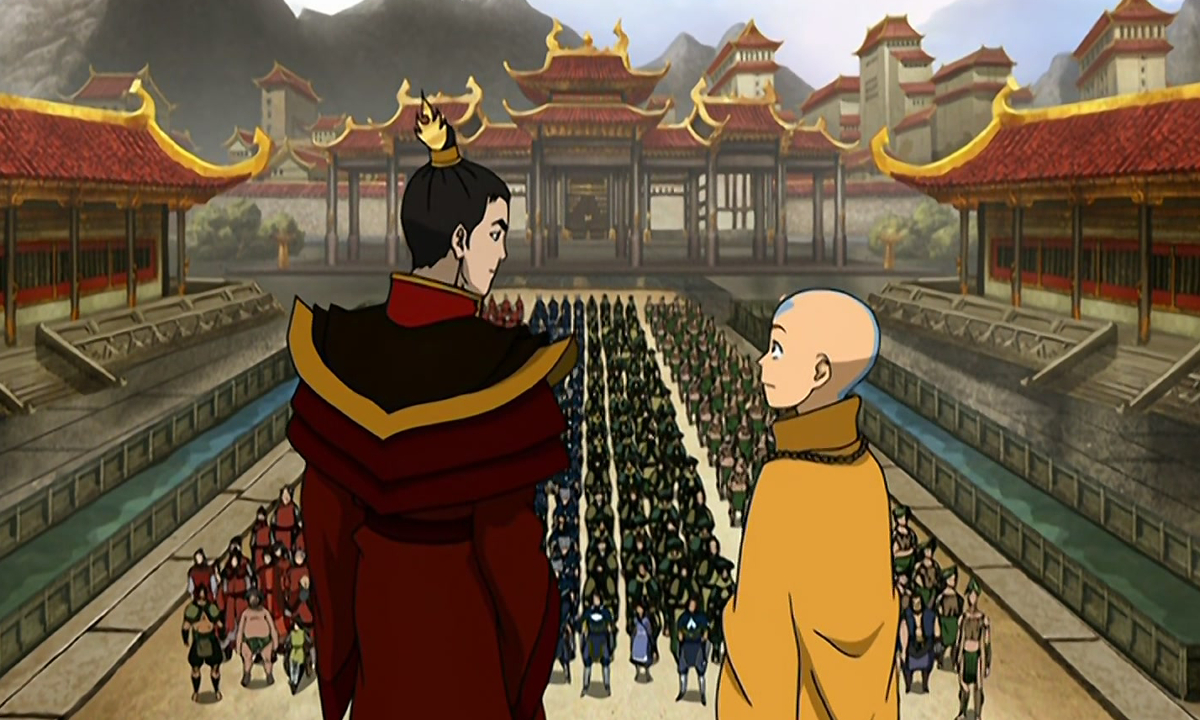
There’s a strong tendency among Avatar: The Last Airbender fans to consider certain ships to be naturally arising from the emotional dynamics of the series. This manifesto starts off with the assumption that many of the dynamics that fans claim to arise organically from other ships do so best and most cohesively when applied to the relationship between Zuko and Aang.
The following will be no debate about preference or even validity. It will instead be about the structure of the ship, how it is built into the narrative, and its narrative centrality.
First, and most importantly, Zuko and Aang are not simply two characters who interact; they are constructed as opposing poles of the same thematic system. One is driven by internal violence, ideology, a fractured sense of self and lack of self-awareness; the other, by restraint, moral absolutism, and the constant need for balance. This antagonism is not superficial–rather, it's central to the plot and serves as a motor to drive the first several episodes. In essence, Zuko pursues Aang and Aang evades him throughout the beginning of the series.
What makes their relationship special is not just the fact that there is tension between them. No, what's unique here is the cycle through which it develops. They confront each other, fail to understand one another correctly, regress, and recalibrate themselves. The cycle continues from episode to episode until finally, Zuko defects from the Fire Nation and seeks acceptance from Aang, the character whom he pursued most persistently and inflicted the greatest damage upon.
All of this matters, because in contrast to many other romantic and supportive bonds in the series, it creates a closed loop of emotions and a mutual understanding between the characters. Not only does Aang forgive Zuko; he does it conditionally. He resists, challenges, and integrates Zuko, making him acknowledge the motives behind his actions. In return, Zuko becomes the only character who can and does question and criticize Aang's moral principles (particularly, his unwillingness to fight fire with fire, if you’ll pardon the pun). Thus, in the context of the plot, the effect is mutually beneficial for both sides, and their relationship is the only one to provide the necessary level of interaction.
This yields a relationship that possesses quantifiable structural characteristics. It encompasses the entire arc of the series (antagonism to alliance), is continually emphasized at key thematic junctures, results in observable, tangible change for both characters, and culminates in a mutual sense of trust built through hard-earned effort, not assumption. This is no trivial detail, as this is the set of criteria that fans use to establish the presence of “deep” or “natural” chemistry.